Our Research
Research
MMLab@NTU
MMLab@NTU advances computer vision and multimodal AI by building models that perceive, reason, generate, and interact with the visual world. Our recent work spans foundation models for vision and vision-language understanding, controllable image and video generation, spatial intelligence and 3D content creation, efficient generative systems, and embodied AI.

Multimodal Foundation Models
We study foundation models that unify perception and generation across images, video, language, and structured visual representations. Our work explores how visual representations can be aligned, adapted, and composed for open-world understanding, dense prediction, promptable segmentation, and multimodal reasoning. We aim to build general-purpose models that transfer across tasks rather than being optimized for narrow benchmarks.
Agentic Multimodal AI
We study multimodal systems that do more than perceive: they remember, plan, reflect, and act. Our work explores long-context memory, world modeling, planning-oriented generation, multimodal grounding, self-reflective reasoning, and interactive agents that can use visual and linguistic context to solve extended tasks. We are interested in building agentic systems that operate coherently over time, integrate external tools and structured memory, and support decision-making in complex environments.
Generative AI for Vision
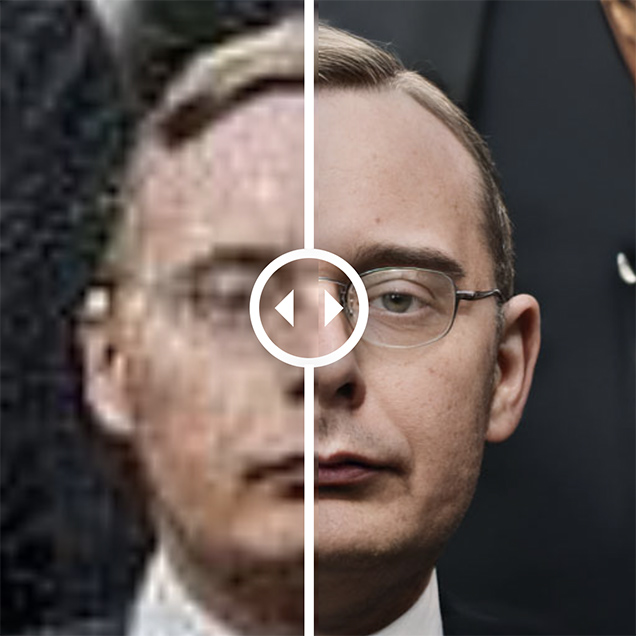
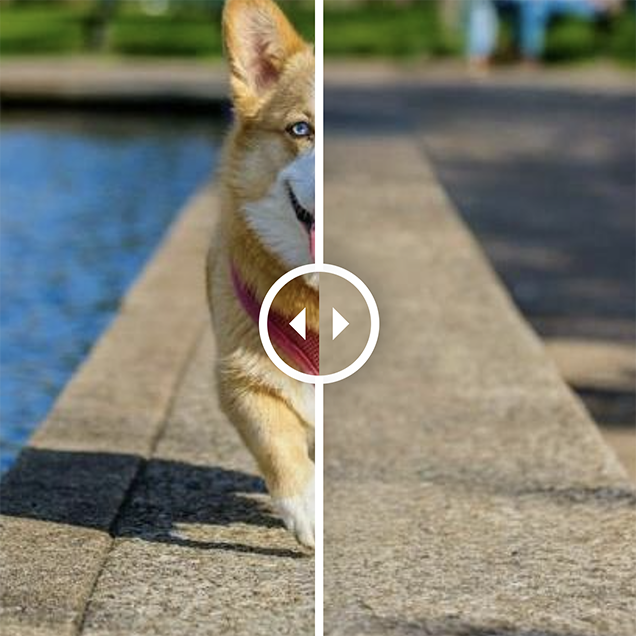
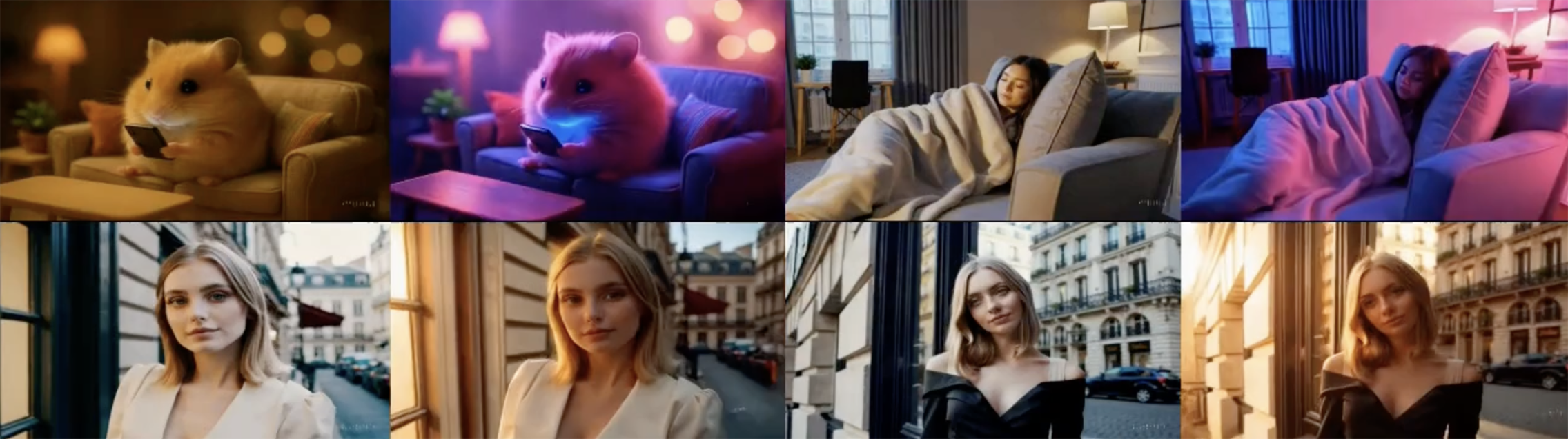
We build models for high-fidelity and controllable visual generation and editing, covering image restoration, super-resolution, video restoration, video translation, inpainting, matting, and language-guided editing. A central theme is integrating strong generative priors with structure and controllability, enabling outputs that are not only visually compelling but also stable, editable, and practical.
Spatial Intelligence
We investigate models that understand and generate geometry, appearance, and motion in 3D. Our work includes large-scale 3D generation, multi-view consistency, neural representations, and joint understanding-generation frameworks. We aim to bridge 2D perception and 3D reasoning to enable scalable creation and manipulation of immersive visual environments.
Efficient and Deployable Generative AI
We study how to make modern generative models more efficient, stable, and deployable. This includes compact architectures, efficient diffusion systems, improved latent representations, and optimized pipelines for real-world applications.
Embodied AI
We explore embodied intelligence by developing models that connect perception, memory, and action. Our work investigates world models, vision-language-action (VLA) systems, and multimodal reasoning for long-horizon tasks. We are particularly interested in compositional and modular architectures that support goal-directed behavior, environment interaction, and continual adaptation in dynamic settings.
Research
Video and Demos




Selected Work
Multimodal AI
- SenseNova-U1: Unifying Multimodal Understanding and Generation with NEO-unify Architecture
By Haiwen Diao et al. - From Pixels to Words - Towards Native Vision-Language Primitives at Scale
By Haiwen Diao et al. - Thinking with Camera: A Unified Multimodal Model for Camera-Centric Understanding and Generation
By Kang Liao et al. - Harmonizing Visual Representations for Unified Multimodal Understanding and Generation
By Size Wu et al. - LMMs-Eval: Reality Check on the Evaluation of Large Multimodal Models
By LMMs-Eval Team - LLaVA-OneVision: Easy Visual Task Transfer
By Bo Li et al.